


When most businesses hear “Salesforce CRM,” they immediately associate it with something powerful, enterprise-grade — and, naturally, expensive. That’s why the launch of a permanently free version by Salesforce created noticeable buzz in the market.
At first glance, it sounds almost too good to be true.
Yet many small businesses sign up, explore the platform, and walk away with a slightly underwhelming reaction: “That’s it?”
Interestingly, that response makes perfect sense.
In this article, I’ll give you a clear and honest perspective on Salesforce Free Suite — what it actually offers, where it falls short, and who can truly benefit from it.
What Is Salesforce Free Suite?
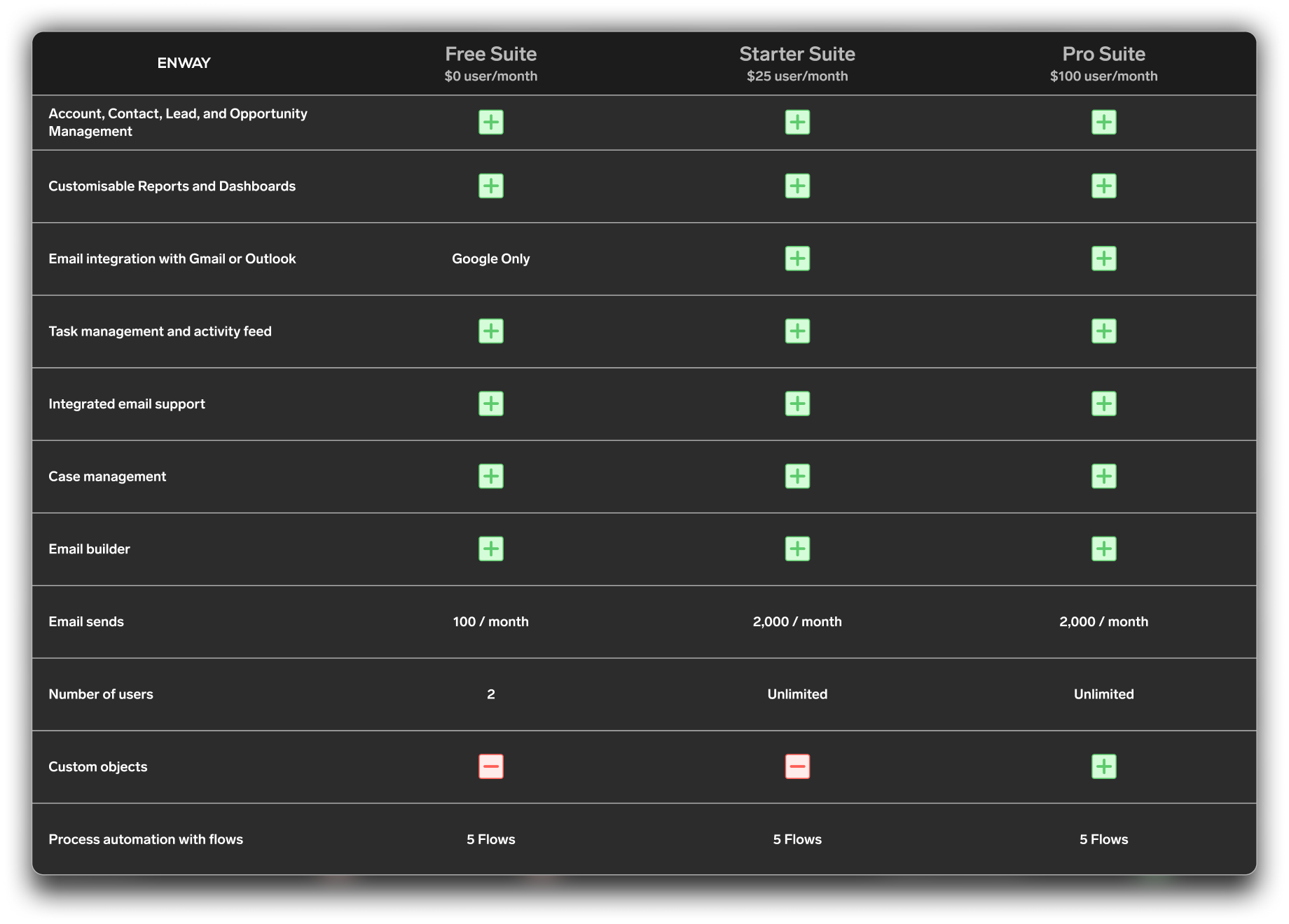
Salesforce Free Suite is a permanently free CRM plan designed for up to two users. It covers the foundational elements most small businesses expect from a CRM system, including contact and account management, lead tracking, opportunity (deal) pipelines, basic reporting, light email functionality, and limited service features.
In other words, it gives you the structural basics needed to move away from spreadsheets and into a centralized CRM environment.
For teams that have never used a CRM before, this can already feel like a significant step forward. It introduces process visibility, pipeline organization, and a cleaner way to manage customer relationships — all within the Salesforce interface.
Why Did Salesforce Launch the Salesforce Free Edition?
Historically, Salesforce has focused on mid-sized companies and enterprise clients. However, the small business market is enormous and highly competitive.
Thousands of small teams need CRM systems, but many opt for alternatives such as HubSpot, ClickUp, or Zoho. Others simply continue working in spreadsheets because traditional CRM platforms feel too complex or too costly at an early stage.
Over the past few years, Salesforce introduced Starter and Pro plans aimed at smaller organizations. The Free edition is a logical continuation of that strategy — especially considering that most major competitors already offer free entry-level versions.
From a market perspective, Salesforce needed a low-barrier entry point. Free Suite is that entry point.
Let’s take a closer look at each of them.
Increase sales productivity by 29% using CRM
ENWAY is a 5-star Salesforce implementation partner, completing projects in Europe, the US, the UK, and the Emirates. We help you choose the right Salesforce edition and get started with CRM.
Key Benefits of Salesforce Free Suite
To evaluate this properly, we need to look at what the Free edition genuinely does well.
1. Salesforce Free Suite Is Truly Free (No Credit Card Required)
One of the strongest aspects of Salesforce Free Suite is that it is genuinely free and does not require a credit card to activate. The signup process is straightforward, and guided onboarding gets you into the system within minutes.
For small businesses testing CRM adoption, this removes friction and financial risk. You can explore the platform without committing budget or entering payment details.
2. Salesforce Free Edition Combines Sales, Marketing, and Service in One CRM
Another advantage is that it brings core functionality across sales, marketing, and service into a single environment.
Sales features include:
- Contact management
- Pipeline tracking
- Activity feed
- Gmail integration
Marketing features include:
- Email builder
- Up to 100 email sends per month
Service features include:
- Basic case management
- Simple reports and dashboards
- Slack conversations directly inside Salesforce
For a very small team, that’s enough to create structure.
3. No Migration Pain When Upgrading from Salesforce Free Suite
Perhaps the most strategic advantage of starting with Salesforce Free Suite is the ability to upgrade seamlessly. If your company grows, you can move to paid plans without losing data or rebuilding your entire system.
This eliminates one of the biggest risks small businesses face when choosing entry-level tools: outgrowing them and needing a full migration later.
From a long-term perspective, this continuity is valuable.
What the Salesforce Free Edition Doesn’t Show
Now we come to the most important point.
Salesforce’s true competitive advantage has never been price — and it’s not just about contact and pipeline management.
The real power of Salesforce lies in its deep customization capabilities: custom objects, advanced automation, integrations, complex workflows, and solutions from the Salesforce AppExchange marketplace.
These features allow Salesforce to adapt to almost any business model or process.
And this is precisely where the Free edition feels limited.
While you do get a small number of automation flows, the Free Suite does not include custom objects, AppExchange applications, or advanced configuration capabilities. As a result, a first-time user does not truly experience what makes Salesforce unique in the enterprise CRM space.
For someone expecting a powerful, flexible system from day one, this can feel underwhelming.
Why Salesforce Free Suite Can Feel Underwhelming
When compared to tools like HubSpot or Zoho, Salesforce Free Suite may appear less impressive at first glance. Competitors often design their free plans to showcase more visible functionality upfront, giving users a clearer preview of the full platform experience.
Salesforce, on the other hand, appears to position the Free Suite as an introduction to its data model and interface rather than a demonstration of its full power.
This creates a strategic challenge: businesses must understand Salesforce’s long-term value in order to justify upgrading. Without that understanding, retention becomes more difficult.
Who Should Use Salesforce Free Edition?
In my view, Salesforce Free Suite is most suitable for:
- Solo founders who want to understand CRM fundamentals
- Micro-businesses with one or two team members
- Companies transitioning away from spreadsheets
- Businesses that want to explore Salesforce before committing financially
However, expectations should remain realistic. The Free edition provides structure and familiarity with the platform, but it does not showcase Salesforce at its most powerful.
It is a starting point — not the full experience.
The Future of Salesforce Free Suite in 2026
Salesforce has indicated that the Free edition will expand in 2026. If that expansion includes more visible customization or automation features, it could significantly strengthen its position in the small business segment.
Until then, Free Suite should be viewed as a low-risk entry door into the Salesforce ecosystem.
Final Verdict
If your immediate goal is simple contact management and pipeline tracking for a very small team, Salesforce Free Suite can serve you well.
However, if you are looking for deep automation, tailored workflows, and a CRM that fully adapts to your unique sales process, the Free edition will not demonstrate that capability.
And that distinction is important.
Starting with the right expectations will prevent disappointment and help you make a strategic decision about whether Salesforce is the right long-term platform for your business.
If you decide to move forward with a structured and properly customized implementation, our team at ENWAY can help you launch Salesforce in four weeks — configured specifically around your sales process.
Start small if needed. But always build with the future in mind.
